Renegade Soundwave made bass-heavy, sample-built records in the late ’80s that London’s pirate stations played before anyone knew who they were. Thirty-seven years on, Carl Cox, Leeroy Thornhill, Nookie and Don Letts and many other top-notch producers have rewired them from the stems. Danny Briottet talks Clash basslines, a French label that never existed, and the night he wrote two classics because he was bored…
Danny Briottet’s car broke down in a heatwave this summer. He was parked up with the engine off, playing a file he had waited a long time for, and the warning lights came on one after another. “My car actually overheated,” he says, still not sure whether to laugh. “All the warning lights came on when I was listening to it.” The file was Carl Cox’s rework of ‘The Phantom’.
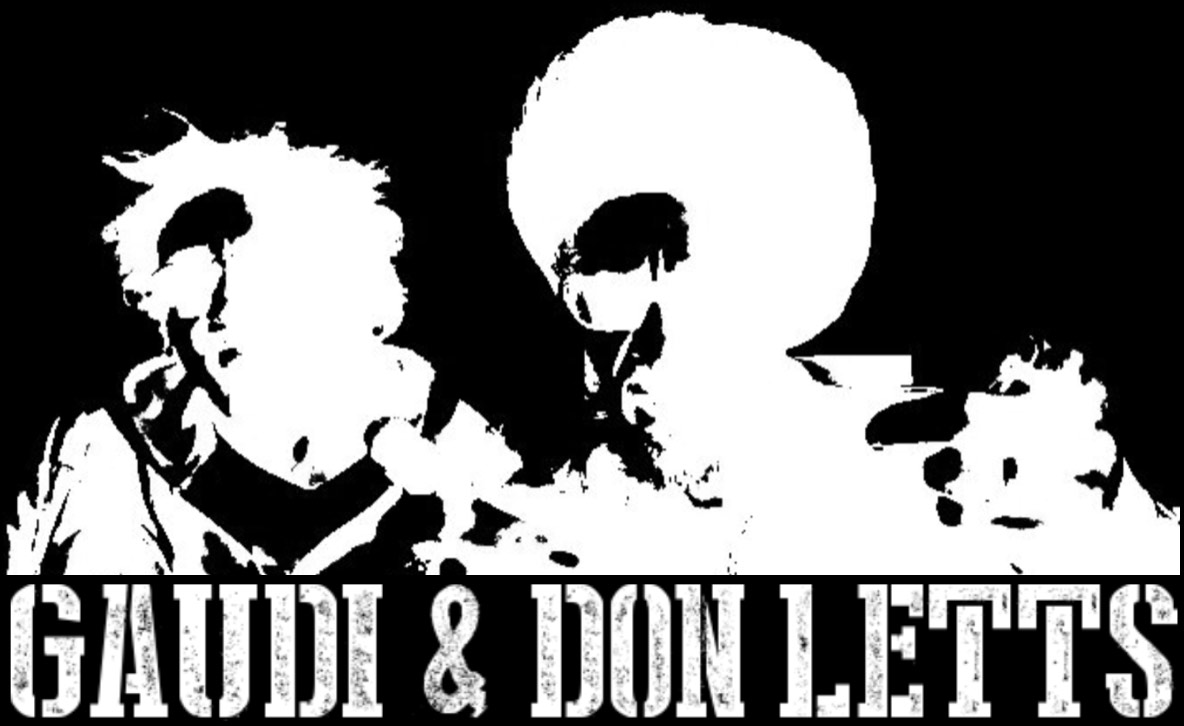
‘The Phantom’ is the record Renegade Soundwave will always be introduced by. It came out in 1989 with no promotion, no press and no label name on the sleeve, and it made its own way into DJ boxes and onto pirate radio. Cox has played the original in Ibiza for years and has been dropping his rework nearly every week at UNVRS this season. It lands digitally on 24th September, the fourth release in ‘Renegade Soundwave Rewired’, a project that hands the band’s catalogue to a roster of producers who grew up on it, starting with Leeroy Thornhill’s ‘Ozone Breakdown’ and Nookie’s ‘Thunder’ on 10th September, then Gaudi and Don Letts’ dub of ‘Wax Wane’ a week later.
“I was so pleased that he’d done it, but I was so pleased with the way that he did it,” Briottet says of the Cox version.
“He kept elements of the original and then he rewired it his own way. As it progresses, it goes from our bits to his bits and it all transitions perfectly. It’s not one of those remixes where people use a little sample of your track and then make another song. He actually did the Carl Cox version of ‘The Phantom’, which is what we were really hoping for.”
The original was not planned
Renegade Soundwave were working on their first album in a big studio, and Briottet got bored.
“I had a little programming room, a second studio. I just went in there on my own and I put down the beats and the basslines and the rudiments of both of those tracks in just a few hours. One night.” Both tracks meant ‘The Phantom’ and ‘Ozone Breakdown’.
“I did feel like I had some kind of energy flowing through me that night. We’d had a long period of just working on tracks in the other room, and this came about very, very naturally.”
What happened next says everything about the band. They pressed ‘The Phantom’ and ‘Ozone Breakdown’ up as a French import, on a label that did not exist. “I’m not really sure why. We just thought that would be the thing to do. It didn’t say what label it was, and a lot of people thought we were Belgian at first, because of all that Belgian new beat. People just didn’t know what it was. I handed out a few copies to DJs I knew and it just seemed to circulate. I’d come out of my house and there’d be a car going by, and it’d be blasting off a pirate station. You felt it everywhere that summer.”
Then there is the chant. ‘The Phantom’ lifts it from The Clash’s ‘White Riot’, and the way it was cleared belongs to a different era. “We gave a white label to [bass player] Paul Simonon. I saw him again a few days later and he was like, ‘Yeah, that’s all right, you can use that’. Then it got to Mick Jones, who was doing Big Audio Dynamite at the time, and he loved it. They used to play the bassline live and do their own version of it.”
Some time later Briottet heard Simonon on Radio 1, being asked about the lawsuit over Beats International’s use of the ‘Guns Of Brixton’ bassline. “The interviewer said, so you’re against sampling full stop? And Paul said, no, there’s a group called Renegade Soundwave and they did it respectfully. They gave me a copy, so we said it was all right. For someone who grew up following The Clash at school, that was amazing.”
West London, Berlin, the Bronx
Ask Briottet who influenced Renegade Soundwave and the answer is not a list of records. It is a list of places. “Jamaican culture was probably the most important one for me. Going to sound systems, growing up with a West Indian community, West Indian friends. I was struck by that music very early on.”
Then Berlin in the early ’80s, “during the Cold War, lots of early experimental electronic music, and the setting it was in was reflected in the music.”
Then New York, “in the embryonic days of hip-hop. As a young white guy from London there wasn’t anybody else there like me, but I was treated really well, the same way I was treated really well in the reggae world.”
Add The Clash, “the sound of the Westway and the swagger”, and a schoolboy at the tail end of punk, and you have the raw material. What turned it into records was an Akai S900 with a tiny amount of memory.
“All of a sudden you had access to your whole record collection, which you could manipulate in whichever way you chose. All these thousands of records you’ve accumulated over the years, and suddenly you can use them as tools.”
He puts the whole thing in one sentence when pushed:
“Bass driven, uncompromising, cutting edge electronic music.”
Acid house arrived while they were making it. Briottet had been putting on illegal warehouse parties around London before the rave scene had a name. “It was like punk, I suppose. It was the biggest youth movement since punk. I don’t think there’s been a bigger one since.” The band’s records sat at the collision point. “Without meaning to, you’re mixing dub with breaks, hip-hop breakbeats, with house tempo flavours. And the other weird influences, we liked film soundtracks. All that came together.”
The attitude
Renegade Soundwave had a reputation. Briottet does not argue with it. “We had a pretty bad attitude, looking back. Arrogant, punky in our approach to everything. Anti-establishment, anti the music business, anti kind of everything. We poured our hearts out on the records. But in terms of playing the game, we just couldn’t do it. And I regret that, if I’m honest, because a lot of the people who took up from where we left off did really well because they had a business sense. We were too uncompromising.”
“Because we didn’t care what anybody thought, we never tried to fit into anything. We never looked at genres, or was anyone going to like it, or was it going to get played on the radio. We just did what we wanted to do. If you liked it, you liked it. If it affected you, great. If not, well, it doesn’t really matter.”
The madness followed them. A chapter of Hells Angels rode from Texas to Chicago to see them play. A man in a toilet somewhere on tour had every Renegade Soundwave sleeve tattooed across his body and only wanted to know if Briottet knew of a squat he could stay in. They blew the sound system at Danceteria in New York on their first gig, before they owned any equipment. And in December 1995 they played a festival in Skopje with The Prodigy, the Bosnian war barely over, the army on the dressing room door.
“I tried to walk into the dressing room with a bottle of beer. One of them told me no. When I said it’s my dressing room, he pulled the Kalashnikov on me. So I’m like, right, fair enough.”
Handing over the stems
‘Rewired’ is not a remix album in the old sense. Every artist worked from stems recorded fresh for the project, and Briottet chose most of them himself, one phone call at a time, until the label gave the idea a home.
“I banged my head against the wall with it for a bit. Before, it was me ringing people up going, I’ve got this idea, do you fancy being part of it?
“Then we started getting the first couple of mixes back, I think the first one was Leeroy Thornhill’s, and it was so good. That energised the project. It was like, right, this can work.”
He heard Leeroy’s ‘Ozone Breakdown’ in a park, watching one of his kids play football.
Nookie’s ‘Thunder’ he played loud in the studio. “I could tell from the opening couple of bars it was going to be good. He chopped the bass up and re-quantised it, made it different. It’s like renegade house, I’d call it. Then it goes into this breakdown at the end with a vocal singing ‘Renegade Soundwave’, almost a soul take on it, completely unexpected.”
He did not know Nookie. He got his number and rang him anyway. “I had to phone him straight away to say, mate, this is brilliant, thank you so much.”
Don Letts is an old friend. “Don’s a mate, and we all know Don is an icon. Gaudi I don’t know, but I like his work. Together it’s a really detailed, really thought-out mix. Ten out of ten.”
“Everyone is doing their own versions of one band’s stuff in a contemporary fashion. To me this is quite a unique project.”
The list runs on from there, and although most of the other names are under wraps for the time being, Briottet is happy with the spread of artists involved.
What is left
Briottet does not pretend the industry he came up in still exists. “They used to say, if you can’t sell 60,000 albums you might as well forget it. Try to sell 60,000 albums now!”
He worries that scenes no longer get time to ferment before the world copies them. But he stops short of nostalgia. “There’s always people with that fire in their soul that are going to make music. For a small island like the UK, similar to Jamaica, we punch above our weight. Jungle, UK garage, grime, it’s people from different backgrounds coming together. I think there’s always going to be good music. It doesn’t matter about AI, sampling, whatever. People are still going to put their soul into things.”
Asked what he hopes Renegade Soundwave leave behind, he does not reach for the reputation, the pirate radio summer or the Cox video with thousands of hands in the air.
“Good music. We left good music behind, and it still stands up. It was never meant to follow any trend or be part of any genre. We just did what we did. Hopefully newer generations discover it, the way we discovered old funk or old electro when we were younger, and think, that’s interesting. That still says something.”